Butter First: Inside the Handwritten Recipe Cards That Taught Immigrant Families How to Belong
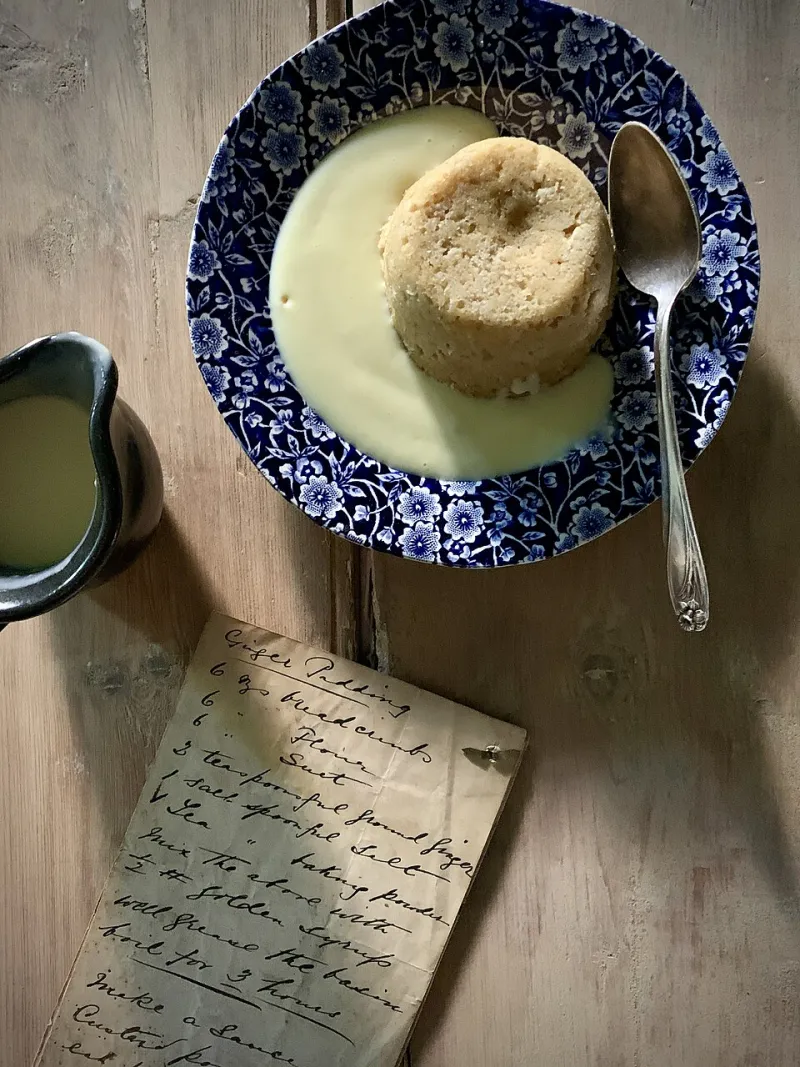
Photo: TheRegencyCook, CC BY-SA 4.0, via Wikimedia Commons
The tin box is the color of an old dime, and it has been on Esther's counter in Bay View, Wisconsin, since 1994. Inside are forty-one index cards in four handwritings, three of them dead. She pulls one out without looking and sets it down between us like a card in a game she has already won.
The first line reads: Butter — the real kind. Don't argue.
That's it. No title. No measurements. Underneath, in a smaller, more patient hand, the actual recipe begins, the way it would if someone were talking to you while stirring.
"My mother began every card with butter," Esther says. "Not because butter is first. Because butter is what you do before you think."
I have been reading recipe cards for a few months now — not the laminated kind, the handwritten kind, the ones that live in shoeboxes and phone books and the back of spiral notebooks in kitchens from Milwaukee to Fresno. And I've become convinced that the first word on the card is the whole story. Everything after it is just cooking.
The Word That Comes Before the Recipe
Out of the twenty-three cards I read closely across nine families, eleven began with an ingredient, and butter won by a mile. It shows up first in Polish, Mexican, Greek, and Hmong homes alike, which tells you something simple and slightly funny: no matter what country you left, the pan gets greased first.
But eight of those twenty-three began with a person.
Rosa, in Fresno, showed me a card dated 1974 in the corner. The first line is not an ingredient at all. It says: Rosa — salt, less than you think. It was written by her aunt before Rosa married and moved north, and it isn't a note about seasoning. It's a note about restraint, addressed to a young woman who hadn't yet learned what she'd need to be careful with.
"She wrote my name first," Rosa said. "So I would see myself before I saw the food."
There is a name at the top of the card. Then there is the recipe for a life underneath it.
The Card That Begins With a Single Letter
In Queens, a woman named Anya keeps a card that says only this, on the first line, in blue ink gone grey:
B.
Nothing else. Below it, half a recipe for a walnut roll, written out of order, with a corner torn away. Anya thinks B means butter. Her sister thinks it's the initial of their great-aunt Biro, whose card it probably was. Neither of them knows, and Anya has stopped trying to find out.
"If I write 'butter' on it, I ruin it," she told me. "So I leave the letter alone. The letter gets to keep its secret."
I think about that card more than I should. A single letter doing the work of a whole introduction. An opening that refuses to explain itself.
It's a lot like the alef — the silent first letter of the Hebrew alphabet, the one that carries a sound without making one. You don't pronounce alef. You pronounce what it opens. Anya's B is that kind of letter. It begins the whole card and says almost nothing, and somehow the saying-nothing is what holds the recipe together.
Place Names in the Corner
Then there are the addresses. Not the mailing kind — the corner-of-the-card kind, the ones people write in small capital letters as if they're not sure they're allowed.
Kraków, 1962. Guadalajara — before. Saigon, kitchen #2. A card in Chicago's Albany Park has the single word Dnipro at the top, no year, no comma. The man who owns it told me his grandmother wrote the city first because the city was the ingredient that had already been used up.
Second-generation cards do something else. Their first words are often English, and often plain in a way that catches in your throat. Sugar. Water. Slowly. One card, kept by a Nigerian American family in suburban Houston, opens with the word Peel, alone on the line, underlined twice, as if the writer were still teaching herself the word for what her hands had been doing since childhood.
The first ingredient on a card is a decision. Everything after it is execution.
The Courage of the Second Kitchen
We talk about immigration in this country as if it were mostly paperwork and policy. Mostly it is Tuesday. It is a woman standing in a supermarket in Ohio, holding a package she can't read, deciding to buy it anyway because it looks like the one from home. It is a man learning that the oven runs hot, adjusting, burning it, adjusting again.
Cooking yourself into a new life is not a metaphor. Your hands remember a kitchen that isn't here anymore — a two-ring burner, a certain brand of flour, the exact forty-five seconds your mother waited before adding the water. When you cook in America, you are constantly translating your own hands.
And here is the thing the cards reveal: people don't start with the hardest part. They start with what they already know. Butter. Peel. A name. You open the page with the thing you can't get wrong, and you build outward from there.
That's not a cooking tip. That's a philosophy of beginning.
A Practice: Copy Only the First Word
If there's a recipe card in your life — your mother's, your grandmother's, a friend's, a stranger's at an estate sale — try this.
Take a fresh index card. Copy only the first word. Not the recipe. Not the measurements. Just the opening: the butter, the name, the city, the underlined instruction, the lone letter before the period.
Put it somewhere in your kitchen that you walk past without thinking. On the inside of a cabinet door. Behind the coffee can. Taped above the stove.
Don't finish it. Let it stay unfinished for a while.
The rest of a recipe card is instruction. The first word is inheritance.