The Drawer of Interrupted Journeys: Confessions From America's Motel Front Desks
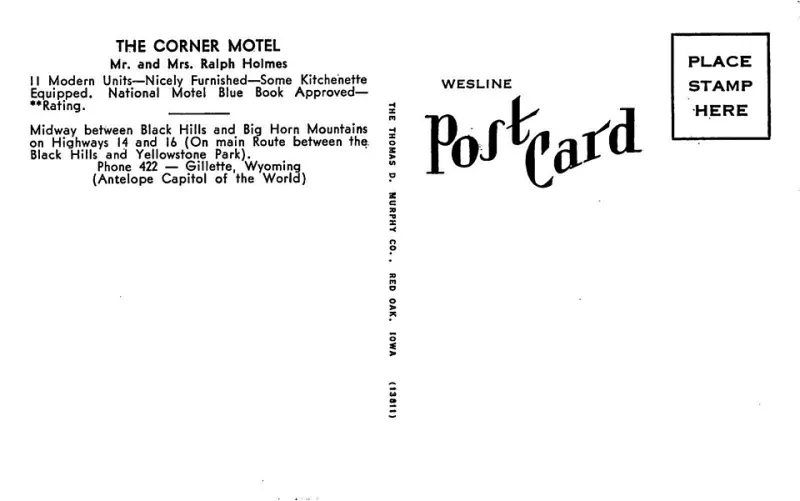
Photo: Thomas D. Murphy Co. (publisher or printer), Public domain, via Wikimedia Commons
There's a particular kind of silence at a motel front desk at 2 a.m. It's not the silence of an empty room — it's the silence of a room that was full. A duffel bag in the closet. A phone charger still snaked behind the nightstand. A key on the hook that nobody came back for.
If you want to understand the American road trip — the real one, not the Instagram version — you don't look at the destinations. You look at what people leave behind.
The Clerks Who Keep the Records
Darlene has worked the desk of a motor court just off Route 66 in Tucumcari, New Mexico, for twenty-six years. She keeps a shoebox under the counter that she calls, without irony, "the museum."
Inside: a single baby shoe. A harmonica. Fourteen room keys that guests pocketed by mistake and mailed back years later, some with apology notes. One key arrived in 2019 from a man in Ohio who wrote, "I took this in 1987. I've thought about it my whole life."
"People think a motel key is plastic and a fob," Darlene told me over the phone. "It's not. It's a decision somebody made about where they were going to sleep that night. Sometimes it's the last good decision they made on that trip."
Every Key Is a Sentence That Stops Mid-
Here's where I have to get a little mystical on you, because the site you're reading is called Key to Alef and we don't pretend otherwise.
In Hebrew mysticism, the letter Alef is silent — it's the first letter of the alphabet, the number one, the shape of a doorway, and it makes no sound at all. It represents a beginning that hasn't spoken yet. A potential. An inhale before the word.
Now sit with this: every unclaimed motel key is an Alef. A journey that started — the car packed, the room paid for — and then stopped before the story got told. The clerk becomes the keeper of all those unfinished first drafts.
Marcus, who has run a place off I-95 in Georgia for fifteen years, puts it more plainly. "You'd be amazed what folks abandon. I've found a wedding dress in a closet. A urn — an urn, man. A dog. The dog stayed two extra days before anyone came."
What strikes him isn't the strangeness. It's the pattern. "People don't leave things behind when they're happy," he says. "Happy people check out neat. The ones who leave stuff — they left in the middle of something. An argument. A realization. A change of heart about the whole direction of their life."
The Archivist Nobody Elected
There's no official title for what a longtime motel clerk becomes. Not historian, exactly. Not therapist. Darlene calls it "keeping the lost and found of people's feelings."
Think about what a front desk actually witnesses. Check-ins at the worst moments of people's lives — after the funeral, after the divorce filing, after the layoff two states from home. The motel room as confessional booth with a continental breakfast. And the clerk, behind the counter, holding the only key (literally) to the space where all of it happened.
In Tucumcari, Darlene keeps a rule: nothing gets thrown away for a year. "A year gives people enough time to realize what they lost and come back for it. Or enough time to become a different person who doesn't need it anymore."
A year. That's not inventory management. That's liturgy.
What We Abandon Says What We're Carrying
There's a reason the forgotten-objects genre of American storytelling — from the shoebox of photos at the flea market to the storage-unit auctions on TV — keeps pulling us back in. We recognize ourselves in the abandonment.
Everyone has a drawer like Darlene's, even if it's metaphorical. The gym membership from the version of you who was going to get up at five. The half-written novel in a folder called "Untitled." The friendship you left in a room in Flagstaff and never went back for.
The mystics would say those objects aren't lost. They're held. Waiting at a desk somewhere, patient as a lamp left on.
The Keys That Come Home
Here's the ending nobody expects: people do come back.
Marcus keeps a wall of returned keys behind his desk — dozens of them, mailed in from across the country. "Once a guy drove eight hours to return a key he took fifteen years ago," he says. "Says he couldn't sleep. I told him nobody cared, take it home as a souvenir. He said no. He needed to put it back on the hook himself."
That's the whole thing, isn't it? The key to Alef isn't about never leaving a journey unfinished. Everybody leaves rooms mid-sentence. It's about knowing there's a hook somewhere with your name on it — and that going back, even decades later, even just to hang the key up yourself, counts as finishing.
The desk is always staffed. The drawer is always open. And somewhere in Tucumcari, a baby shoe is waiting for a foot that's grown all the way up.