Pocket Prophets: The Tiny Objects Americans Refuse to Leave Behind
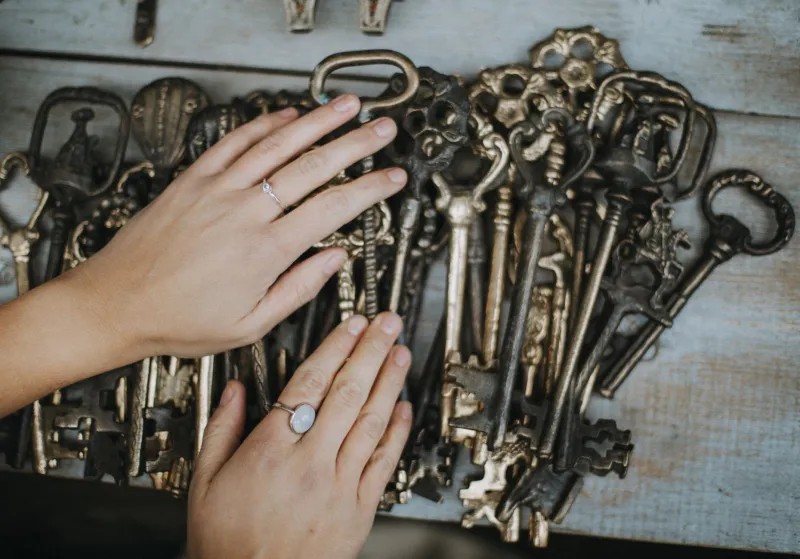
There's a moment at every airport security line when America empties its pockets onto a gray plastic tray, and for a few seconds, the country's private mythology is on full display. Coins, yes. Earbuds, sure. But then: a bent brass key that opens nothing anymore. A smooth river stone. A poker chip from a casino in Reno where somebody made a decision that changed their life.
We reached out to readers and asked what talisman they carry and why. The answers came in from Portland to Providence, and they were less about luck than we expected. They were about permission.
The Key That Opens Nothing
Marcus, 54, a contractor from Ohio, has carried his late father's workshop key for eleven years. The workshop was sold in 2014. The key is decorative at best.
"People think it's about grief," he told us. "It's not. It's about standing in front of a hard job and remembering my old man would just walk in and start. I touch the key, and I start."
This is the pattern that kept surfacing: the object isn't magic. It's a trigger. A physical bookmark in a mental book. Psychologists sometimes call this an "anchor" — a sensory cue that recalls a state of mind. Everyone else just calls it their lucky whatever, and stuffs it back in their jeans.
Six Objects, Six Doors
Here's a field guide to what America's carrying, drawn from the stories you sent us:
- The coin from the year that mattered. A 1996 quarter in a wallet in Atlanta, carried since a sobriety milestone. "Heads, I made it. Tails, I keep making it."
- The guitar pick. Carried by a nurse in Austin who played open mics before night shifts. "It reminds me I'm not just my badge number."
- A sea-worn shard of beach glass. From a woman in Maine who found it the morning she decided to leave a marriage. It's been in her coat pocket through three winters.
- The casino chip. Reno, 2019. The night its owner decided to ask for the promotion instead of waiting to be noticed. He got it. The chip stays.
- A costume-jewelry ring, two sizes too small. A grandmother's. Worn on a chain, not a finger. "She pretended to be fancy," her granddaughter wrote, "and it worked, so now I pretend too."
- An actual key. To a first apartment, long gone, in Chicago. The owner describes it as "the key to the version of me that signed a lease on nothing but hope."
Notice something? Almost none of these objects are about winning. They're about beginning. They mark thresholds — the day someone decided, the morning someone left, the night someone asked.
How to Choose Your Own Key
If you don't carry a talisman yet, you can't fake one. A trinket bought from a gift shop has no story, and story is the whole engine. Instead, go looking for a threshold:
- Find the object at a moment of decision. The best talismans choose you, usually on a day when something shifted.
- Keep it small enough to forget. The point is the touch, the half-second in the pocket. If you're managing it, it's not working.
- Never explain it out loud. The moment you have to justify it, it becomes a performance. These things live in the quiet.
- Let it retire if it needs to. Some keys stop opening doors. That's allowed. Gratitude, then pocket the next one.
The Alphabet in Your Pocket
We call this site Key to Alef for a reason. Alef is the first letter of the Hebrew alphabet, and a key is the first thing you reach for at a locked door — both are just small objects that stand for begin. Every bent coin and dead key in every American pocket is the same letter, written in a private alphabet. A reminder that the door you're staring at might already be unlocked.
Empty your tray at the next security line and look down. Somewhere in that pile of lint and loose change, there's probably a prophet. Listen to it.