Three Alphabets, One First Breath: Why Hebrew, Greek, and Latin All Began at the Same Place
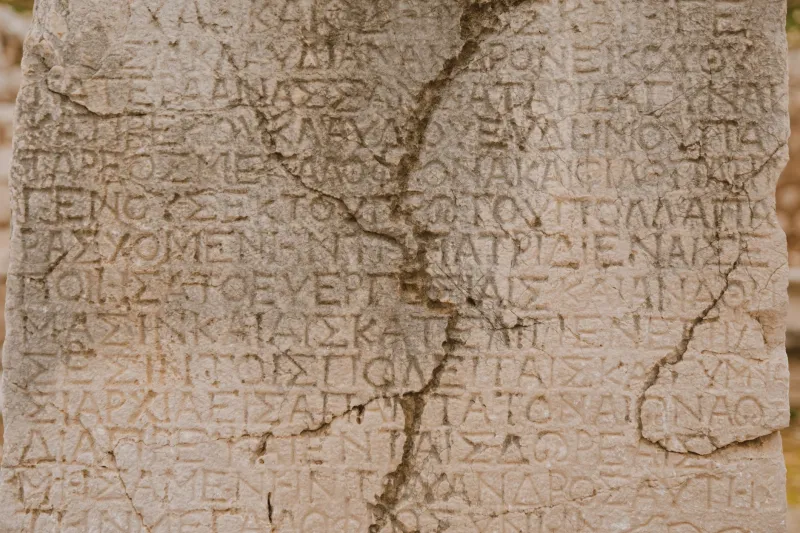
There's a question hiding in plain sight at the top of nearly every alphabet humans have ever built: what goes first?
It sounds like a trivia question. It's actually a philosophical one. When a civilization arranges its symbols into a sequence—when it decides which character deserves the honor of being number one—it's revealing what it believes about beginnings themselves. And when you line up three of the West's most influential alphabets side by side, something almost eerie happens.
Alef: The Silent Start
Hebrew begins with Alef, and here's the strange part: it makes no sound on its own. Alef is a glottal placeholder, a breath, a vessel that borrows its voice from whatever vowel rides along with it. The mystics of Kabbalah noticed this early and ran with it. If God created the world through letters, they reasoned, then the first letter couldn't be a sound—because sound came later. Alef had to be the silence before the first word.
Think about that for a second. A whole culture looked at the concept of "the beginning" and concluded that the truest version of it is inaudible. The moment before the moment. The inhale before the sentence.
There's a lesson in there for anyone staring down a fresh start in 2025—new job, new city, new notebook with a spine that hasn't been cracked yet. The beginning you can't hear yet is still a beginning.
Alpha: The Ox That Carries Everything
Greek didn't invent its alphabet from scratch. It borrowed from the Phoenicians, who started their system with a character called aleph—and aleph, in the ancient Semitic world, meant ox.
Picture that. The first letter is a farm animal. A beast of burden. The thing that pulls the plow.
The Greeks took the symbol, kept the shape, softened the name into Alpha, and dropped the meaning. But the image lingers if you look for it: the idea that every beginning is a draft animal. It does the heavy lifting while the rest of the words—the rest of the life—get planted behind it.
When mathematicians use Alpha today, they mean the first, the origin point. When fraternities name their chapters, Alpha signals the founders. The ox is still there, quietly hauling the whole tradition uphill.
A: The Ox Wearing a Crown
Latin got its alphabet largely through Greek and Etruscan channels, and its first letter—our first letter, the one on your keyboard right now—started life as that same ox pictograph. Rotate an A upside down and squint: there are the horns, the head, the yoke.
So the letter that starts "America," "awake," and "again" is, at its root, a drawing of an ox. Three alphabets, three eras, one animal at the door.
What's remarkable isn't the sameness. It's that each culture re-inherited the beginning rather than inventing one. None of them could bear to start from zero. They all reached back and borrowed the first breath from someone before them.
Why We Keep Reinventing the Fresh Start
Here's where the linguistics turns personal.
Every January, millions of Americans make resolutions. Every Sunday night, we swear this week will be different. Every blank document, empty journal, and first-day-of-anything carries the same quiet promise: this time, from the top.
We're not being naïve. We're being ancient. The impulse to consecrate a starting point—to give it a special letter, a special name, a special silence—is one of the oldest habits our species has. The Phoenicians drew an ox. The Kabbalists heard a silence. The Greeks named it Alpha and started writing tragedies with it.
And us? We buy the new notebook. We download the app. We light the candle and open the laptop at 6 a.m.
Different tools. Same Alef.
The Key Hidden in the First Letter
Maybe that's the actual takeaway: beginnings are never truly original, and that's not a flaw—it's the mechanism. Every fresh start is a hand-me-down from every fresh start that came before it. When you begin again, you're joining a chain that runs from an ox cart in ancient Syria to your kitchen table this morning.
The first letter doesn't ask you to be new. It asks you to start—to carry the weight forward, like an ox, or to hold your breath for one more second before speaking, like Alef.
Either way, the door opens the same direction.
Turn the key. Say the first word. Even if it's silent.