Aisle One at Midnight: What I Learned From the People Who Shop While the Rest of Us Sleep
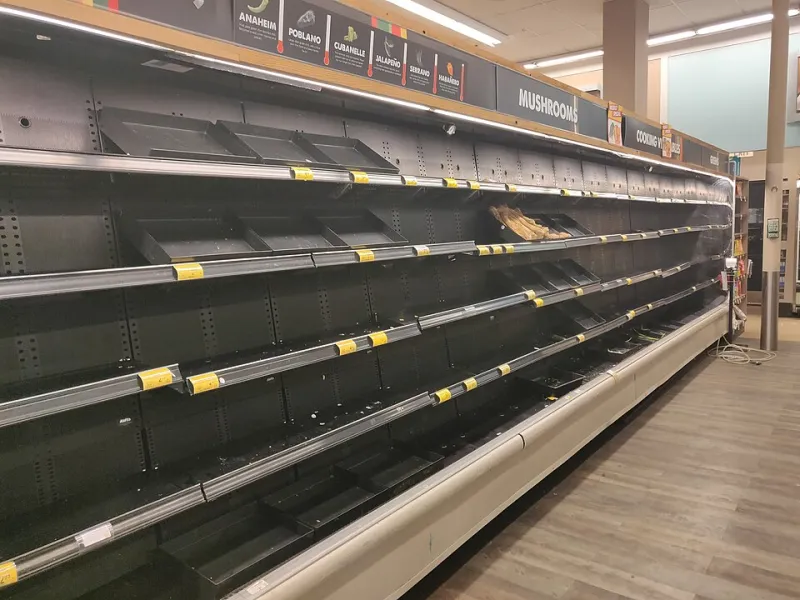
Photo: Kurt Kaiser, CC0, via Wikimedia Commons
It started with a letter. Not a resolution, not a gym membership I'd abandon by February — just the letter A. My own small twist on the "one word for the year" trend, except my word had no meaning at all, which felt refreshingly honest. I decided that for twelve months, I would simply notice things that started with A: apricots, alleyways, afternoons, the hum of air conditioners waking up in May.
What I didn't plan on was where the letter would drag me at its most insistent hour. Because A, it turns out, also stands for 3 a.m. — okay, not technically, but that's when the letter started pulling me toward the grocery store.
The Club Nobody Advertises
If you've never been grocery shopping at three in the morning, you should know there's a whole quiet civilization down those aisles. Nurses coming off night shifts. Bakers buying flour by the pallet. New parents pacing with a cart like a stroller substitute. A guy who told me, without prompting, that he does his "thinking shopping" at night because "the avocados don't judge you at three."
I started going because of the letter. My A-noticing habit had hit a wall — everything interesting felt already seen, already photographed, already captioned. But the 24-hour supermarket at 3 a.m. felt like a page nobody had written on yet. The produce section under fluorescent light, the misters hissing over the lettuce like a tiny rainforest, the firstness of it all. Alef, the first letter. The threshold. I was standing in one.
Why We're All Looking for a Smaller Ask
Here's what I think is actually going on, both with my weird letter experiment and with the midnight shoppers: Americans are tired of big resolutions. We've run the marathon of self-improvement plans and we're done. What we crave now is something smaller — a lens, not a leash.
A single letter is the smallest possible promise. It asks nothing of you except attention. And attention, unlike willpower, tends to compound instead of collapse. By March, I wasn't just noticing apricots; I was noticing everything — the alley behind the pharmacy, the afternoon light hitting my kitchen floor at 4:40, the way the automatic doors open for you like the store is saying come in, we've been waiting.
The 3 a.m. shoppers taught me the same lesson from the other direction. Nobody at that hour is optimizing. They're just moving through the world in the quiet gaps, doing their errands like a secret handshake with the day.
The Threshold Aisle
The mystics had a word for what I felt in aisle one: liminal space. A doorway moment. Neither the day before nor the day after. The Hebrew alphabet — the one that gave us Alef — starts with a letter that some scholars say originally pictured an ox, a beast of burden, something that carries. Others say it's the breath before speech, the silent inhale.
Both readings fit a grocery store at 3 a.m. We're all carrying something. We're all inhaling before the day starts talking.
I asked the night-shift cashier, a woman named Denise who has worked the graveyard shift for eleven years, what she's learned from the midnight crowd. She shrugged and rang up my single bag of apricots (of course apricots).
"People are softer at night," she said. "Daytime, everybody's in a hurry. Night people let doors close slow. They say thank you twice."
Your Turn: Pick a Letter, Pick an Hour
I'm not saying you need to restructure your sleep schedule. But if your resolutions keep dying of ambition, try the small ask. Pick a letter. Pick an hour nobody else wants. Walk through a door that's usually locked when you arrive.
You might find, as I did, that the first letter of the alphabet was never really about words at all. It's about being willing to stand at the beginning of something — a day, a habit, a year — before anyone else gets there, cart wheels squeaking, and simply notice.
The store is open. The letter is waiting. Come in.