The Doors Nobody Opens Anymore: What America's Orphaned Locks Are Trying to Tell Us
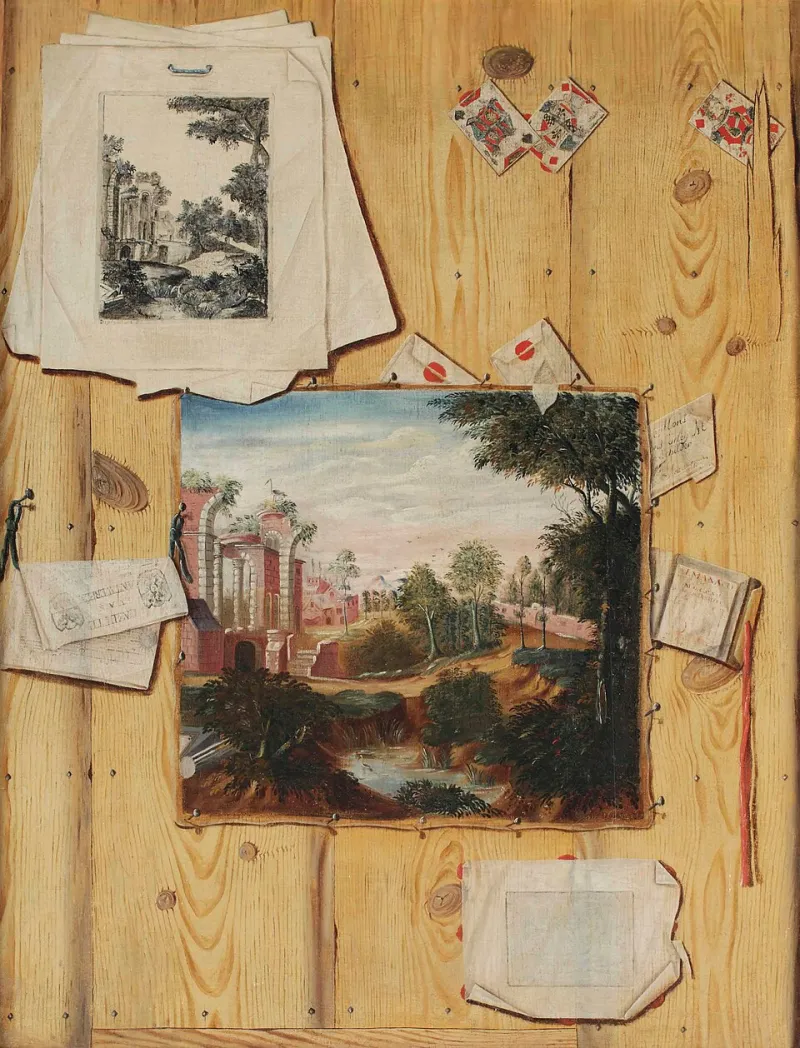
Photo: Jacobus Plasschaert, Public domain, via Wikimedia Commons
There's a bank vault in Marfa, Texas, that nobody can open. Not because it's high-tech — it's from 1912 — but because the combination left this earth along with the last teller who memorized it. The bank closed in the '60s. The building became a boutique, then a gallery, then mostly a story people tell. The vault just stayed. Sealed. Patient.
If you drive through enough American small towns, you start noticing them everywhere: doors that no longer lead anywhere, locks that no longer answer to anyone. I've started calling them orphaned locks, and I think they might be the most spiritual objects in the country.
The Brass Knob That Someone Still Polishes
In Eureka, Utah — a near-ghost town south of Salt Lake City — there's a boarded-up hotel with a brass doorknob that shines. That's the detail that got me. Boarded windows, peeling paint, but that knob is polished. Somebody, or many somebodies, touches it when they walk by. Maybe out of habit. Maybe out of something closer to devotion.
We usually think of a door's meaning as binary: open or closed, locked or unlocked. But these doors live in a third state. They're neither barriers nor passages. They're memorials that happen to be shaped like entrances.
And here's what fascinates me: Americans keep them. We're supposedly a people who bulldoze and rebuild, who tear down the mall every fifteen years. Yet the sealed door of the old Masonic lodge survives three changes of ownership. The rusted gate to a farmstead that hasn't farmed since the Nixon administration still swings on its hinges — or refuses to, as the case may be.
When a Key Outlives Its Lock
Ask around any town long enough and you'll hear about the key that someone still has. A skeleton key to the old schoolhouse. A key to a storefront that's been a church, then a bar, then nothing. The key exists; the door it fits may not.
I met a woman in rural Ohio who keeps her late father's key to a grain elevator that burned down in 1987. She keeps it on a nail in the kitchen. She knows it's irrational. She keeps it anyway.
We could call that sentimentality and move on, but I think something deeper is happening. A key is a promise of access. When the door vanishes, the promise doesn't dissolve — it just has nowhere to land. So we hold it. The key becomes a small, cold way of saying: there was a here here.
The Alef on the Door
At Key to Alef, we spend a lot of time thinking about beginnings — the first letter, the first stroke, the first turn of a key. Hebrew tradition teaches that alef is silent, a letter of pure potential that makes no sound of its own. An orphaned lock is the architectural version of alef. It hums with possibility that never gets voiced.
A locked door you have the key to is just logistics. A locked door nobody can open anymore is a question. It asks: what were we guarding? What were we waiting for? What would happen if we stopped treating it as a problem to solve and started treating it as a teacher?
Because here's the thing — not every door needs to open to do its work. Some doors teach us by staying shut. They hold a town's memory in place the way a paperweight holds a page. Open the vault, and Marfa loses a mystery. Keep it sealed, and every passerby gets to wonder.
The Practice of Noticing
I've started a small ritual on road trips, and I'd offer it to you: in every town you pass through, find the one door that nobody opens. Don't photograph it for the abandoned-buildings group. Just stand with it for a minute.
Ask yourself what it closed on. Ask who still carries its key — in a junk drawer, on a nail, in a memory. Notice whether the lock looks maintained or surrendered to, because that difference tells you how a town feels about its own past.
Some doors are kept out of pride. Some out of grief. Some because tearing them down would cost money nobody has. But every one of them is a conversation between the people who left and the people who stayed.
What the Lock Knows
We tend to think spirituality lives in the open — open hearts, open minds, open doors. Fair enough. But there's a quieter tradition, the one that says some things are meant to stay closed so that something else can stay alive. The sealed vault protects not the money (long gone) but the wondering. The boarded hotel protects not the rooms but the shine on the knob.
The next time you see a door that outlived its purpose, don't feel sad for it. It's not unfinished business. It's finished business, kept visible on purpose — an alef carved into the streetscape, silent, first, waiting for nothing.
And if you happen to be the person holding a key to a door that no longer exists: keep it. Not every key needs a lock. Some just need a hand that remembers why it mattered.