The First Stroke: How Our Grandparents' New Alphabet Still Shapes the Way We Begin
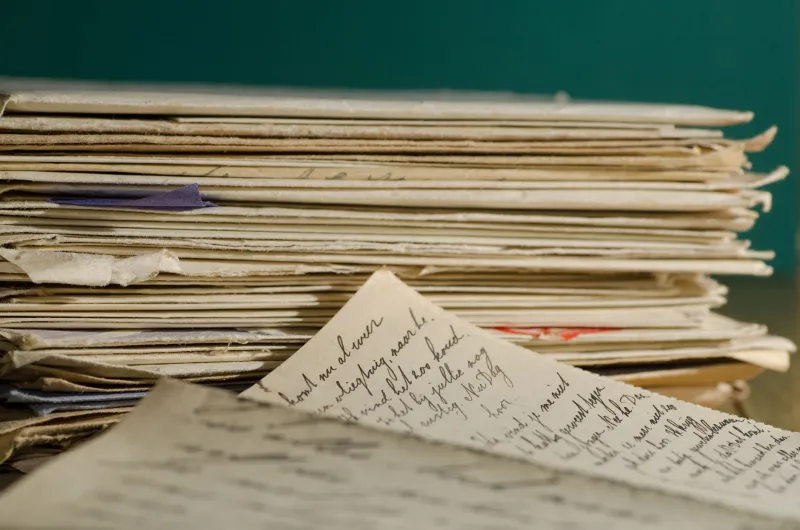
My grandmother's handwriting had two personalities. In Yiddish, her letters flowed like water finding its way downhill — fast, sure, a little impatient. In English, the same hand became a stranger. Rounded, careful, almost childlike. She'd learned the Latin alphabet at twenty-two, on a factory floor in Paterson, New Jersey, sounding out shipping labels while the machines roared.
I used to think that was just a cute detail about immigration. I don't anymore.
I think learning a new alphabet as an adult might be one of the bravest things a person can do — and that the first letter of that alphabet carries a weight the rest of us, born into our letters, can barely imagine.
The Letter You Have to Learn to Want
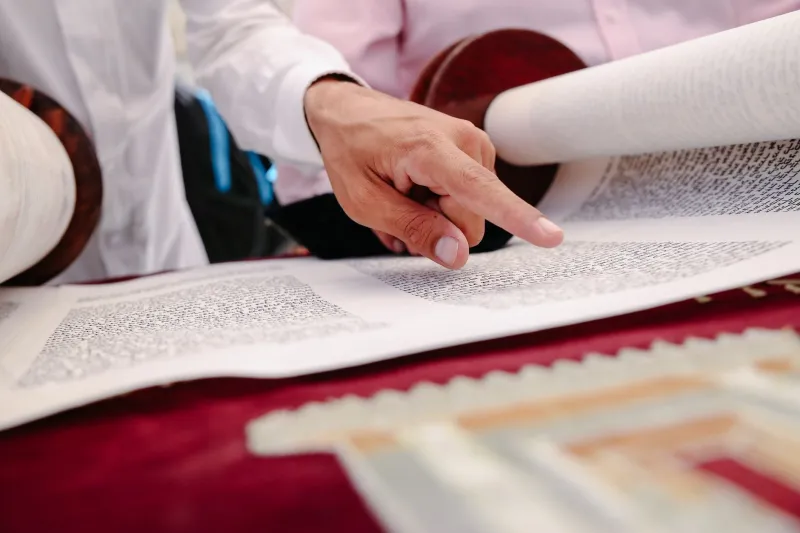
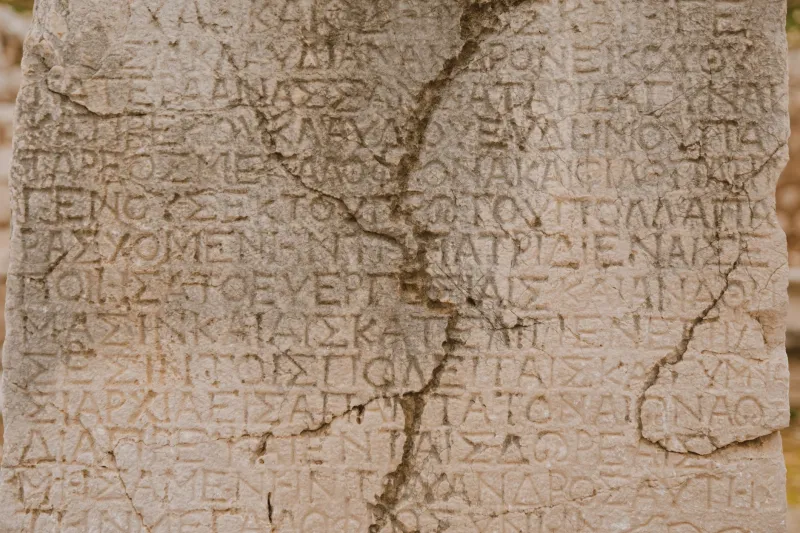
In Hebrew, the alphabet opens with Alef. In Greek, Alpha. In Latin, A. Three traditions, three shapes, one shared intuition: the beginning is a letter, and the letter is a door.
But here's what the mystics understood and the textbooks skip: Alef is silent. It represents nothing you can hear until something else arrives. The first letter of the alphabet is, in a sense, pure potential — a shape that only means something when you commit to what follows it.
Now picture arriving at Ellis Island in 1911, or a Greyhound station in 1958, or a community college ESL class in 1994, and being handed that shape. Not just a letter. A whole new way of beginning.
Three Generations, One First Stroke
I spoke with three families about their own Alef moments — the instant a new alphabet entered the household. The stories are different. The shape of the story is not.
The name at the gate. Ruth's grandfather came through Ellis Island from Poland, and family lore says his surname was simplified there — shortened, smoothed into something an American clerk could spell. "For years we treated that like a wound," Ruth told me. "Then my daughter studied genealogy and found the ship manifest in his actual handwriting. He'd signed his old name beautifully. The clerk just couldn't read it." What Ruth's family eventually made peace with: the old alphabet never disappeared. It was always there, underneath, in the signature.
The word on the floor. Marco's grandmother learned English one word at a time in a garment factory in the Bronx. Her first word, according to everyone in the family, was "scissors." Not hello, not please — scissors. "She said it was the most useful word in the building," Marco laughs. "But she also said that the first time she wrote it, in pencil, on the inside of her pay envelope, she cried. Not because it was hard. Because it was hers." A first word, a first letter — sometimes they arrive in the middle of ordinary work, not at a ceremony.
The letter home. Lan's father came to Houston from Vietnam in 1980 and wrote home every month for twenty years. She showed me one once. The opening line began with an English phrase he'd practiced: Dear Mother, I am fine. "I asked him why he started letters in English when the rest was Vietnamese," Lan said. "He said: 'I wanted her to see, in the first stroke, that I was learning.'" The letter wasn't information. It was evidence.
What the First Letter Actually Means
The mystics had a term for the idea that beginnings contain their whole trajectory. When you write the first letter of a word with intention, tradition holds, the rest of the word follows differently — the hand remembers how it started.
I think that's what these families were describing without knowing it. The first English word, the changed name, the bilingual salutation — these weren't small details of assimilation. They were the first strokes of a new hand, and everything after — the businesses opened, the kids sent to state schools, the Thanksgiving tables that grew to include in-laws from three continents — flowed from that initial commitment to make a mark in an unfamiliar script.
The Alef Moment You Inherited
Here's the part that surprised me most: this isn't only an immigrant story. If your family has been in Ohio since 1820, you still carry an inherited alphabet — the way your people learned to begin again after a farm failed, a mine closed, a war took someone.
Every American family has a moment when someone picked up an unfamiliar pen and wrote a first letter anyway. That's arguably the whole national story, compressed into a single stroke.
So here's a small practice, and it works whether your people came through Ellis Island or across the Bering land bridge: find the earliest handwriting you can from an ancestor. A signature on a manifest, an address on an envelope, a name in a family Bible. Look at the first letter they wrote.
That letter was silent once, like Alef. It meant nothing until everything that followed gave it a voice.
Somebody in your line went first. The handwriting — shaky, strange, new — is the proof.