What Your Keychain Is Trying to Tell You: A Field Guide to the Keys We Can't Let Go Of
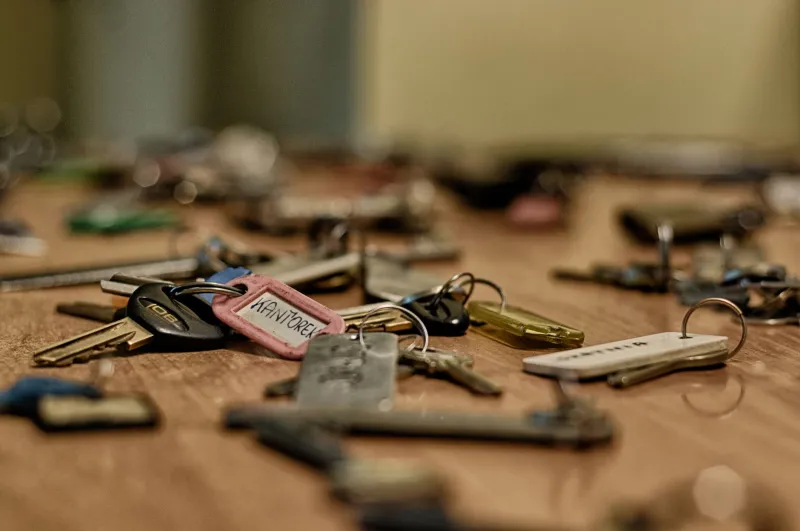
Look down at your keychain right now. Go ahead — I'll wait.
If you're like most Americans, you're holding a small, jangling archive of your entire life. The house key from your first apartment. The car fob with the worn-off buttons. A padlock key for a gym you haven't visited since March. And — this is the important one — at least one key that opens absolutely nothing you can name.
We talk about reading tea leaves and pulling tarot cards, but honestly? The keychain is the most honest divination tool in America. Nobody curates it for company. You don't buy a keychain to impress anyone. It just accumulates, the way character does.
The House Key: Your Claim on Belonging
Start with the obvious one. The house key is rarely about the house. It's about the sentence it completes: I have somewhere to return to.
Notice which ring it lives on. People who keep their house key on their person at all times — separate from the car keys, tucked in a pocket — tend to be homebodies with a private streak. People whose house key is buried in a giant cluster with twelve others? They're out in the world, and home is one voice among many calling them.
And then there's the ex's key. Or the parents' key. Or the key to a friend's place in a city you used to live in. You know exactly which one I mean.
The Mystery Key: The Door You Forgot on Purpose
Here's where it gets interesting. Ask a room full of people how many have a key they can't identify, and roughly half the hands go up. A key to a bike lock long gone. A key to a storage unit in another state. A key to a diary, a safe, a locker, a life.
Why do we keep these? A locksmith in Ohio told me people bring in mystery keys all the time and ask her to identify them — then ask her not to cut them off the ring. "They'll say, just in case. Just in case of what? They don't know. That's the point."
The mystery key is a bet you placed on your own future. It says: someday, a locked thing will matter to me again, and I want to be ready. That's not clutter. That's hope, machined in brass.
The Car Key: The American Freedom Chip
No country on earth attaches more meaning to car keys than we do. In the US, the car key isn't transportation — it's the teenage rite of passage, the road trip, the move across country with everything you owned in a Corolla.
People who keep their first car key long after the car went to the junkyard aren't being sentimental fools. They're keeping the receipt for a version of themselves that could just leave. Worth asking: when did you last use that leaving-energy?
A Lighthearted Keychain Reading
Want to try this on yourself? Here's a quick guide, tarot-style:
- Three keys or fewer: You've edited your life down to essentials. Either deeply at peace, or one bad week away from buying a van.
- Seven-plus keys: You are the person everyone else relies on. You hold keys to other people's worlds. Question: who holds yours?
- A keychain from a road attraction (Gatlinburg, Route 66, the Las Vegas sign): You believe in joy that doesn't need to justify itself. Good.
- The mystery key: Your past self left you a riddle. Sit with it. What door were you keeping open?
- A tiny flashlight on the ring: You are, functionally, a lighthouse. Carry on.
Why We Never Throw a Key Away
Here's the ritual truth underneath it all: a key is the only object whose entire purpose is access — and access, once granted, feels wrong to surrender. Throwing away a key feels like slamming a door you might need. Keeping it costs nothing but a jingle.
So we carry them. Little brass promises that every version of ourselves we've ever been still has a way back in.
Maybe that's the real reading. Your keychain isn't about the doors you've opened. It's a map of the ones you're still willing to walk back to — and the ones you're quietly waiting to unlock next.