Leave a Light, Leave a Key: The Secret Geography of American Trust
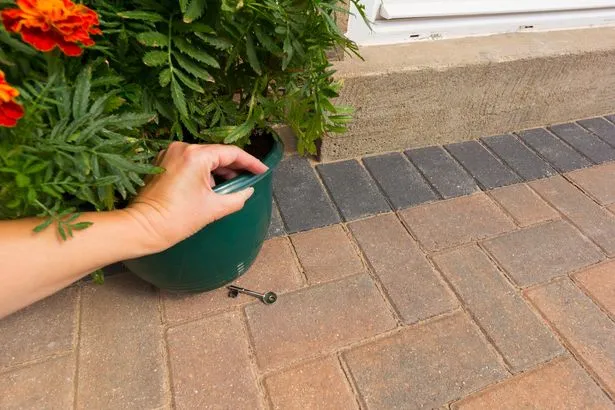
Photo: spare house key hidden under flower pot on front porch, via i2-prod.dublinlive.ie
There's a map of trust in this country that no cartographer has ever drawn.
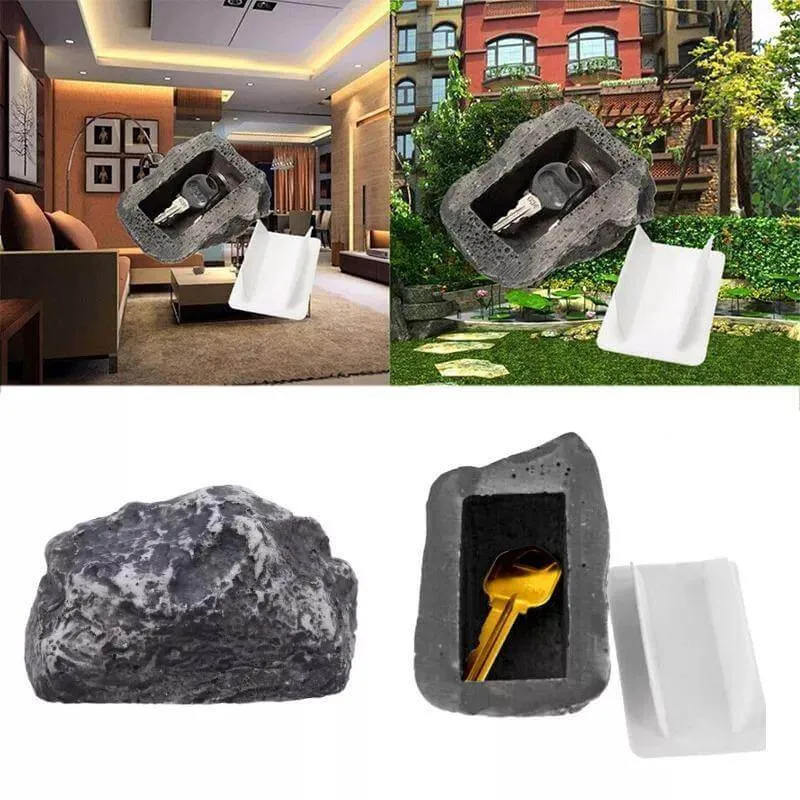
It lives in the third flowerpot from the left on a porch in Ohio. In the loose siding above the back door of a farmhouse in Vermont. In the birdhouse that's never held a bird, in the gutter that's never been cleaned, in the magnetic box slapped to the frame of a pickup truck idling in a Phoenix driveway.
We all know the map. Most of us are on it.
And here's the thing nobody wants to say out loud: the hidden key was never really about security. It's about hope.
The Lock That Wants to Be Opened
Think about the strange contradiction at the heart of the hidden key. We buy the deadbolt. We install the camera. We tell ourselves the house is a fortress. And then — in an act of pure, quiet rebellion against our own paranoia — we tuck a key somewhere and whisper its location to exactly one person.
The lock performs protection. The hidden key performs something else entirely.
It says: I have built a life with a door, and I want that door to work for someone besides me.
In the mystical traditions that gave the alphabet its first letter, the door is never just a door. It's a threshold between what is and what could be. The Hebrew mystics taught that every opening is an invitation — that the divine enters where space has been made for it. Hide a key, and you've made space. You've declared, in the smallest physical way possible, that your life is not a closed system.
That's not a security measure. That's a theology.
Who Is It For?
Ask someone where their spare key is hidden and watch what happens. They'll glance at the door, lower their voice, and tell you — but the answer always comes with a name attached.
It's for my mother, in case she stops by and I'm not home. It's for my brother. He's had a rough couple of years. It's for the neighbor, in case of a pipe burst.
Notice that nobody says it's for a burglar. The hidden key imagines only welcome. It's an act of pre-forgiveness, pre-hospitality — a way of saying if your life falls apart at 2 a.m., my house has already decided to let you in.
In an era when we can unlock our front doors from an app in another time zone, the flowerpot key looks quaint. But the smart lock answers a question about technology. The hidden key answers a question about people. And the people question is the one we can't stop asking: who would I let in, no matter what?
If you can't answer that, the key under the mat is at least a first draft of the answer.
The Ritual of Telling
Here's the part of the ritual we don't talk about enough: the telling.
Nobody finds a hidden key by accident. The key only works because someone said the words — it's behind the shutter, under the second pot — and someone else agreed to remember. That exchange is a tiny covenant. Two people, one secret, one door.
Compare that to the digital alternative. A code sent to your phone. A temporary access window that expires. Efficient, sure. But there's no covenant in a push notification. The hidden key requires a human memory, and human memory is a form of devotion. To hold someone's key location in your mind for years — through moves, through new pots, through repainted siding — is to carry a small obligation of care everywhere you go.
Some of us are still carrying key locations for houses we haven't visited in a decade. Some part of us remembers where the door opens, just in case.
The Alef Under the Mat
The first letter of the alphabet, in its oldest form, was a picture of an ox head — strength, service, the creature that carries the load. But the mystics read it another way: alef is silent. It makes no sound of its own. It only lends its breath to the letters around it.
The hidden key is the alef of the home. Silent. Unwritten. It appears on no blueprint and no lease. It contributes nothing to the appraised value of the property. And yet the whole meaning of the house — the part about who belongs, who is welcome, who is trusted — hangs on that one silent character.
Remove it, and the house is just walls. Keep it, and the house is a sentence that begins with an open door.
An Honest Flaw
Every locksmith will tell you the hidden key is a bad idea. They're right, in the way that a cardiologist is right about dessert. The hidden key is a vulnerability we choose on purpose — and there are very few of those left in American life.
We optimize. We insure. We encrypt. We back up our backups. Into that sealed and sensible world walks a person crouching on their own porch at dusk, wedging a brass key behind a downspout, and thinking of one specific face.
Maybe that's the real security system: not the camera, not the code, but the knowledge that somewhere out there, one person knows where the key is — and would only ever use it to come home.
Leave the light on. Leave the key where you said it would be. Some doors are meant to stay findable.