The Fake Rock Knows: What Our Spare Keys Say About the Doors We Leave Ajar
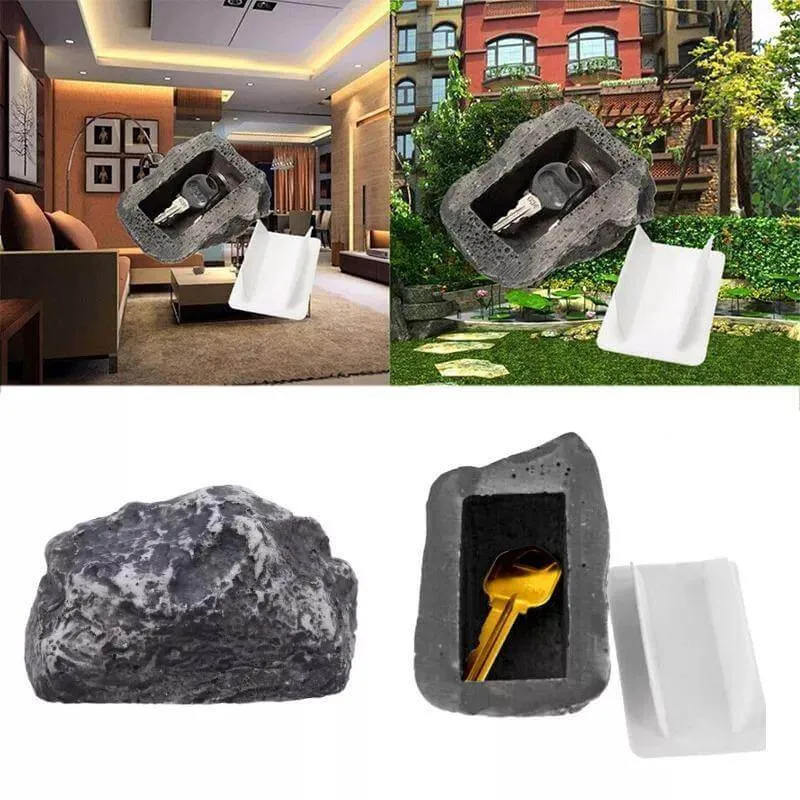
Photo: spare house key under fake rock in garden flowerbed, via mavigadget.com
There's a particular species of plastic rock sold at every hardware store in America, and we all know exactly what it's for. It sits in the garden bed looking lumpy and geological, fooling absolutely no one, guarding a house key the way a screen door guards against a hurricane.
And yet we keep buying them.
The Hiding Place That Isn't
Think about the geography of the American spare key. It lives under the third flowerpot from the porch steps. It's wedged in the rain gutter above the kitchen window. It dangles from a nail inside the garage, which — and here's the good part — is itself usually unlocked.
We are a nation of people who believe deeply in security and behave like people who believe deeply in second chances. The locked door says stay out. The key under the mat says unless you know where to look. Which is to say: unless you're one of us.
Psychologists might call this a compromise formation. I'd call it something older and stranger: a threshold ritual. We want a door that is closed but not sealed, guarded but not shut. We want the option of return.
The Alef Under the Mat
On this site, we talk a lot about the letter Alef — the first character of the Hebrew alphabet, the silent one, the one that makes no sound of its own but powers every vowel that follows. Mystics describe it as the point where the infinite leans into the ordinary.
A spare key is a pretty good Alef.
It's silent. It does nothing on its own. It sits in the dirt or under a pot, holding its single piece of information — you may enter — waiting for someone to come looking. The key doesn't open the door. It only proves the door was always openable.
Which brings us to the uncomfortable question: what else have we hidden in obvious places?
Just Accessible Enough
Everyone has a drawer — maybe the junk drawer, maybe the nightstand — that contains a thing they're not actively pursuing but have not released. The sketchbook from the year you were going to draw again. The name in your phone you don't text but won't delete. The half-finished novel in a folder called "Drafts."
These are keys under mats.
We tell ourselves we've moved on, but we've done something more revealing: we've moved the key to a spot we can still find. Not on the ring with the others, where it would be in daily rotation. Not thrown out, which would close the door for good. Just accessible enough. Hidden from guests, findable by the only person who matters — future us.
The wry read is that we're bad at hiding things. The mystical read is that we're excellent at leaving doors. Every hidden key is an invitation we're not ready to admit we wrote.
The Porch Light Test
Here's a small ritual, in the spirit of this site's Daily Rituals section — call it the Porch Light Test.
Tonight, before bed, ask yourself one question: What have I hidden where I can still find it? Don't fix it. Don't commit to a project or make a vision board or download an app. Just name the key. Say where it is.
The point is not to open the door tonight. Doors open on their own schedule, usually at inconvenient hours. The point is to stop pretending the rock is fooling anyone — including you.
There's a version of self-improvement culture that says burn the boats, delete the number, close every exit. That's one philosophy. But there's an older, gentler one buried in the letter Alef and in every lumpy plastic rock in every garden bed in Ohio: keep one door ajar. Not for escape. For the self who isn't ready yet.
Come In, It's Open
The people who know where your key is — the neighbor with the spare, the sister who watered your plants — understand something we forget. Being entrusted with a hidden key means being trusted at the threshold. It means someone said, in effect: the door is locked, but not for you.
Maybe that's the whole practice. Figure out which doors you've left ajar for your future self, and forgive yourself for it. The fake rock in the garden was never a security failure.
It was a promise, waiting quietly in the dirt.